Access Bank Nigeria Plc
Introduction
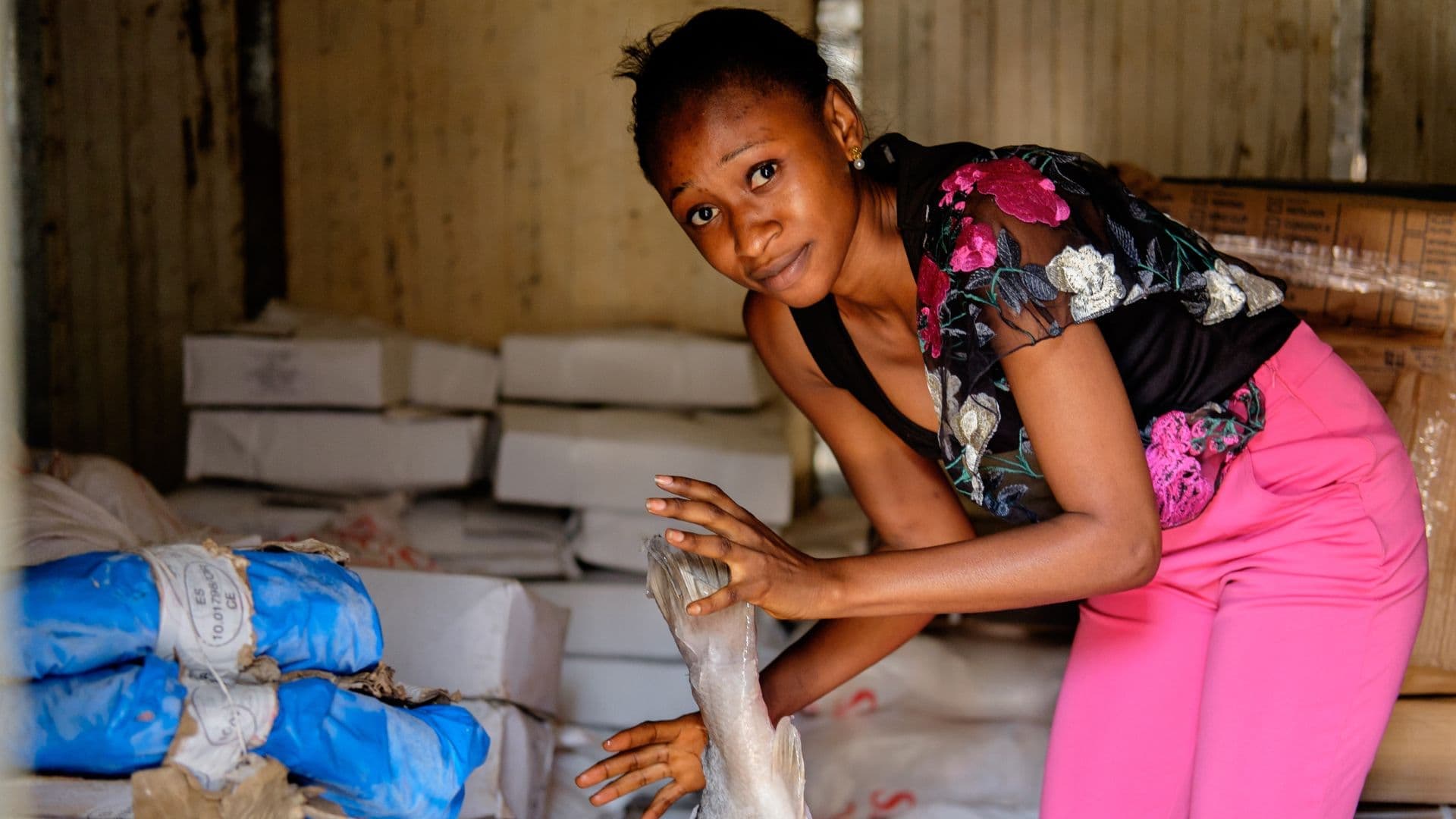
Access Bank is important for Nigeria’s financial system. The bank is well-positioned to reach a significant number of underserved micro, small and medium enterprises (MSMEs) in the country.
Swedfund's investment contributes to sustainable private sector development, fosters inclusive growth and increases access to finance. By providing long-term capital and capacity building initiatives to businesses that lack access to banking services, the investment is expected to contribute to inclusive growth and sustainable development that reaches youth, women and entrepreneurs in rural Nigeria.
Co-investors include FMO, BII, BIO, Finnfund and Norfund.
Read more in our press release: Investment for enhanced access to finance for MSMEs in Nigeria
Related links:
Swedfund Policy For Sustainable Development
Swedfund E&S Categorisation
Facts
SDG in Focus
Reduced Inequalities
Reduce inequality within and among countries.
Decent Work and Economic Growth
Promote sustained, inclusive and sustainable economic growth, full and productive employment and decent work for all.
Gender Equality
Achieve gender equality and empower all women and girls.
No Poverty
End poverty in all its forms everywhere.
Sector

Financial inclusion & MSME financing
Swedfund’s investments in Financial Inclusion are made in regulated banks and microfinance institutions in order to increase access to debt capital for entrepreneurs, MSMEs and low-in come earners, or in local investment platforms, local companies or through so-called private equity funds to increase access to equity capital for MSMEs.
Value creation
Impact
The investment enables small and medium-sized enterprises to access long-term finance through loans, contributing to economic growth, jobs and other income-generating opportunities locally. The investment promotes women as leaders, contributes to job opportunities for women and provides women with access to finance.
Additionality
Swedfund’s investment is financially additional as in Nigeria and the sector, access to capital is limited, poverty rates are high, the business environment is challenging, and as it is expected to help mobilise capital. The investment is value additional through a strong focus on active value creation during the investment phase, prioritising the environment, sustainability, corporate governance and capacity building.
ESG Summary
Requirements
In line with Swedfund’s Policy for Sustainable Development, the portfolio company is required to materially comply with, inter alia: (i) all internationally recognised human rights (ii) the EDFI harmonized exclusion list and EDFI Fossil Fuel Exclusion List, (iii) local environmental, health & safety and labour laws and regulations, (iv) applicable IFC Performance Standards, (v) the ILO’s Declaration on Fundamental Principles and Rights at Work and the ILO’s Basic Terms and Conditions of Employment.
ESG risk
E&S risk categorisation is High Risk (FI-A) based on the FI’s investment geography and lending portfolio’s exposure to high E&S/impact risk sectors.
ESG mitigation measures
Swedfund is looking to support the Bank to continue developing its capacity in the areas of SEAH and gender equality.
Applicable IFC Performance Standards
IFC Performance Standards (PS) 1-4 are applicable to the financial institution (FI) and its subsidiaries. IFC PS 1-8 may be applicable for the clients of the institution.
Whistleblowing channels and Grievance Mechanism
Swedfund’s whistleblowing services can be used by employees, contractors and others at Swedfund, and by the companies and funds in which Swedfund invests. The complaints mechanism can be used for all types of complaints concerning Swedfund and Swedfund’s portfolio companies, but not for complaints concerning individuals as a result of restrictions arising from data protection legislation. 🔹 Link in website footer.